
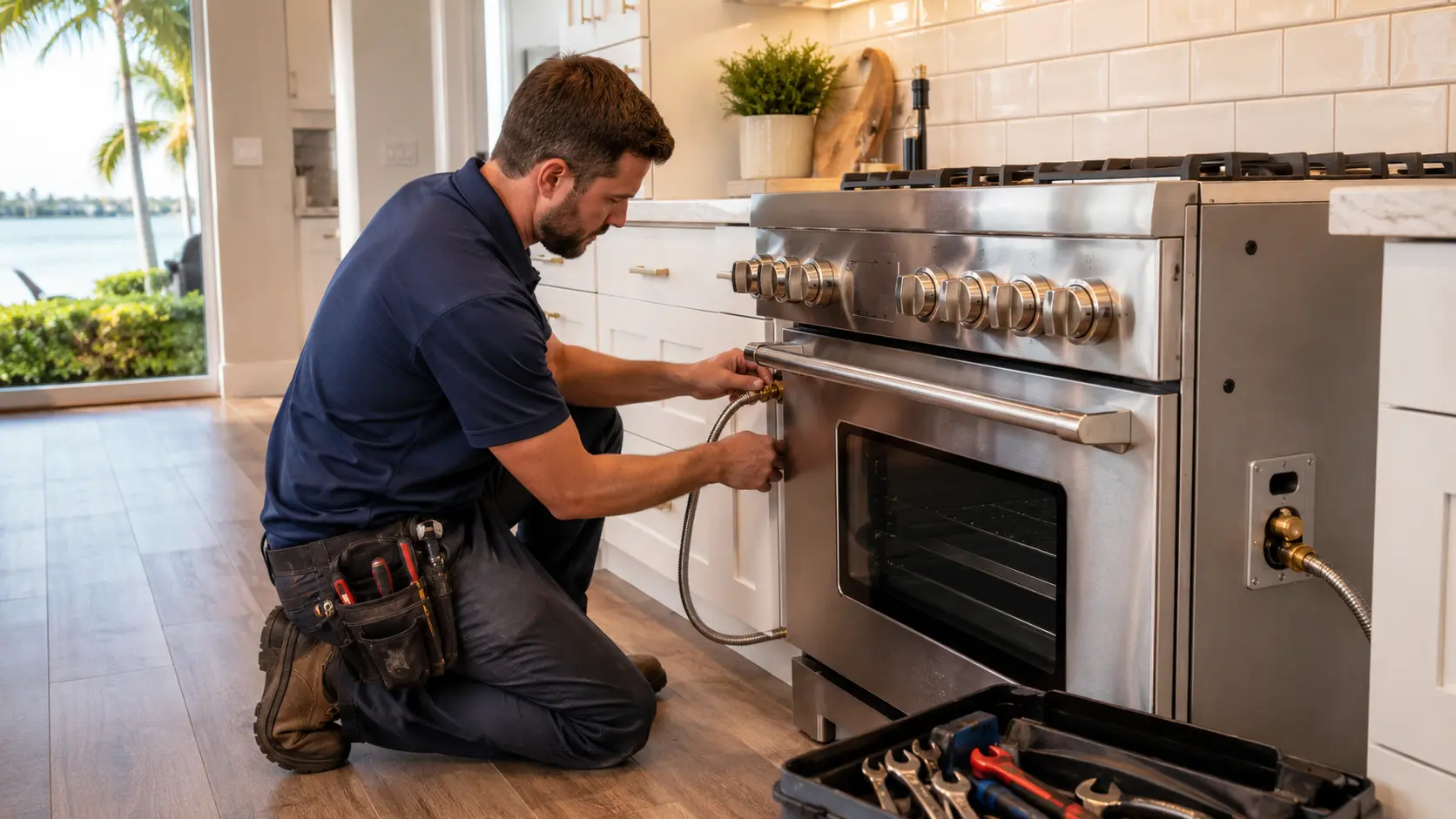
Switching from an electric stove to a gas range can change the way you cook, but the appliance itself is only part of the project. If your kitchen does not already have a properly sized gas connection, you may need professional gas line installation in Tampa, FL before the stove can be connected.
Installing or modifying a residential gas line is not a typical DIY plumbing project. The work involves fuel gas, proper pipe sizing, secure connections, testing, and compliance with applicable requirements. For Tampa homeowners, understanding the process ahead of time can make the project easier to plan and help avoid surprises.
Do You Need a New Gas Line for a Gas Stove?
Not every gas stove installation requires a completely new line.
If your home already uses natural gas or propane, there may be an existing gas piping system that can potentially be extended to the kitchen. A professional will need to determine whether the existing system can safely support the additional appliance.
You are more likely to need a new or extended gas line if:
- You are replacing an electric stove with a gas model.
- The kitchen has never had a gas appliance.
- An existing gas connection is located too far from the new stove.
- The existing piping is not appropriate for the new appliance.
- You are remodeling and moving the stove to another part of the kitchen.
- The existing gas connection needs to be updated before the appliance can be installed.
A plumber should evaluate the existing system rather than assuming that an old connection is ready for immediate use.
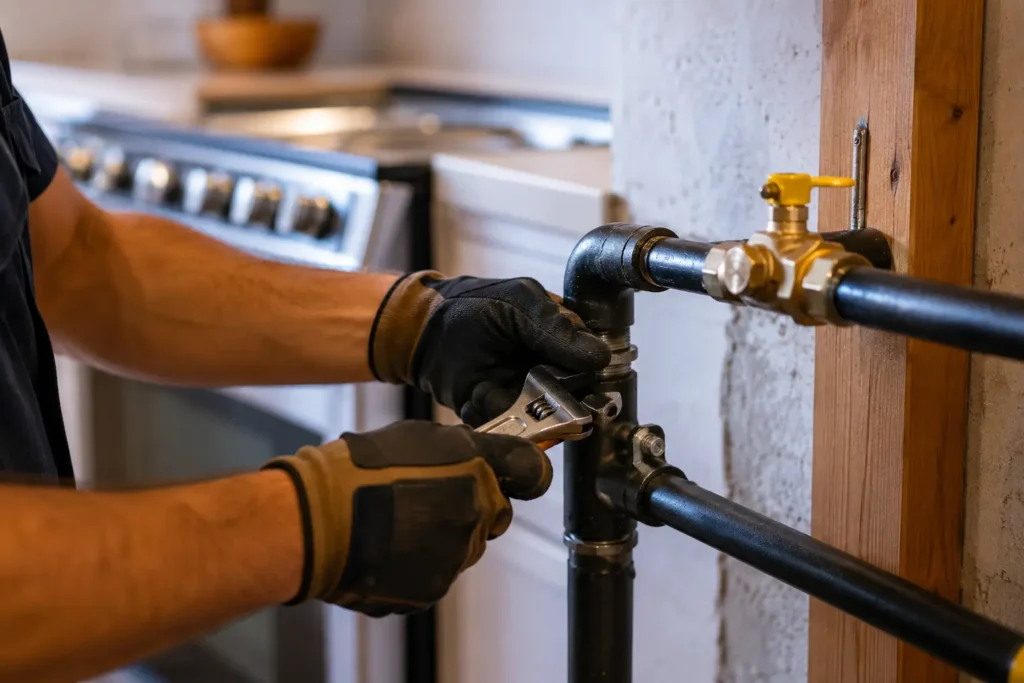
What Does Gas Line Installation for a Stove Involve?
A typical gas line installation for a stove begins with an evaluation of the property and the appliance being installed.
The exact process depends on the layout of the home and the location of the existing gas supply, but most projects involve several basic steps.
Evaluating the Existing Gas System
The plumber first determines where the existing gas supply is located and whether the current system can accommodate another appliance.
This may involve reviewing:
- Existing gas piping
- Appliance location
- Pipe routing options
- Other gas appliances in the home
- The fuel type being used
- Access through walls, attic spaces, crawl spaces, or cabinets
The objective is to determine a safe and practical route for the new connection.
Planning the Gas Line Route
The distance between the existing supply and the stove can significantly affect the complexity of the job.
A stove located near an existing gas line may require a relatively straightforward extension. A kitchen located on the opposite side of the house may require considerably more routing.
Depending on the home, the line may need to pass through accessible structural areas before reaching the kitchen.
Installing the Pipe and Connections
The plumber installs the appropriate piping and fittings needed to bring gas service to the appliance location.
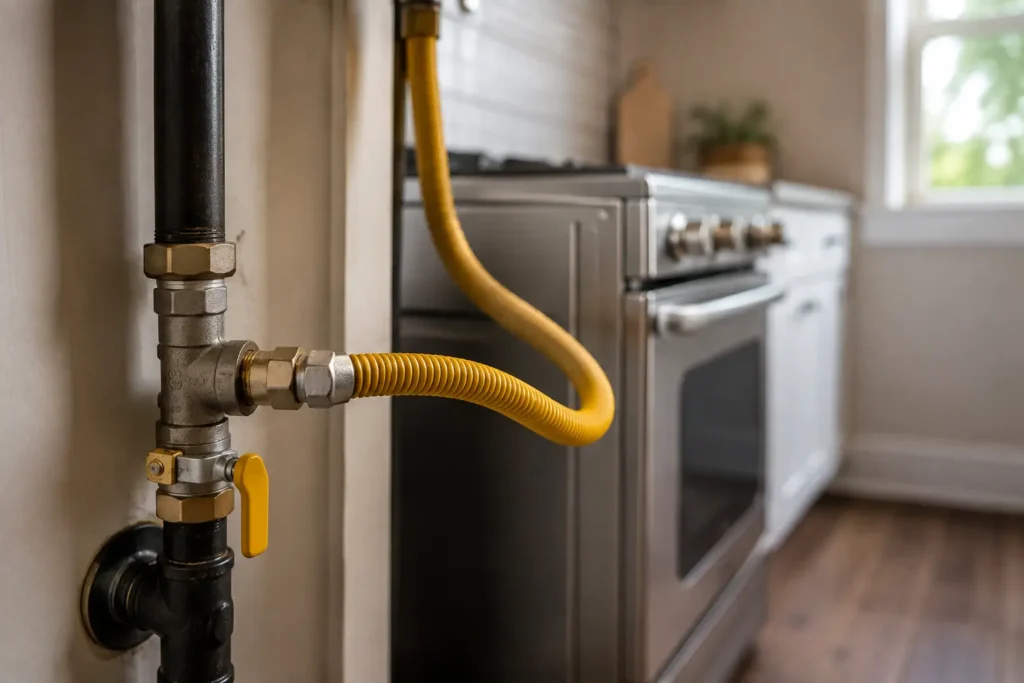
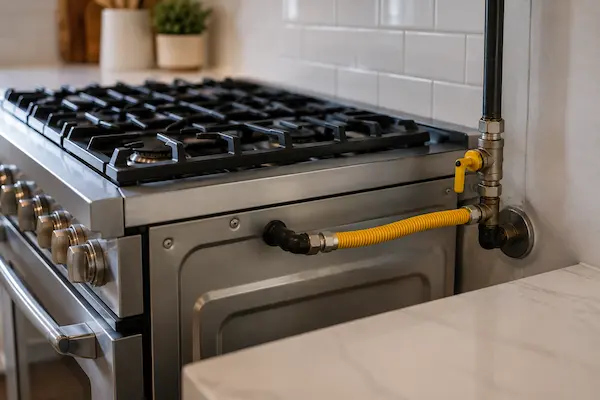
A dedicated shutoff valve is typically installed near the stove so the appliance can be isolated from the gas supply when necessary.
The connection must also be positioned so the stove can be installed correctly without putting unnecessary stress on the piping or appliance connector.
Testing the Installation
Testing is one of the most important parts of residential gas line installation.
Before the stove is placed into normal operation, the new piping and connections need to be checked for leaks and proper installation.
Gas should never be introduced into newly installed piping without appropriate testing.
What Affects the Cost of Gas Line Installation in Tampa?
There is no single accurate price for every gas stove installation. The cost depends heavily on the home and the amount of work required.
Rather than focusing on a generic online estimate, homeowners should understand the factors that usually determine the final price.
Distance From the Existing Gas Supply
One of the biggest variables is how far the new stove is from an existing gas line.
A short extension from a nearby supply point will normally require less material and labor than running piping through several areas of the home.
Accessibility
Easy access can make installation considerably simpler.
For example, routing a line through an accessible attic or crawl space may be easier than opening finished walls or working around built-in cabinetry.
Every home has a different layout, so accessibility should be evaluated on site.
Existing Gas System Capacity
Adding another appliance is not always as simple as connecting another branch to the nearest pipe.
The existing gas system needs to be capable of supplying all connected appliances appropriately. A professional may need to evaluate the existing piping before determining how the stove should be added.
Kitchen Remodeling
If the gas line is being installed during a kitchen renovation, the project may involve coordination with cabinetry, flooring, walls, or appliance placement.
Planning the gas connection before cabinets and finishes are completed can sometimes make the installation easier.
Additional Work Needed
Some projects require additional modifications beyond the new appliance connection.
Examples could include replacing outdated components, modifying existing piping, relocating a shutoff valve, or correcting a connection that is not suitable for the new stove.
A site evaluation is the most reliable way to determine the actual scope of work.
Can You Install a Gas Line for a Stove Yourself?
Gas piping is one area where homeowners should avoid experimenting.
An improperly installed gas connection can create a fire, explosion, or carbon monoxide hazard. Problems are not always immediately obvious, either. A connection may appear secure while still allowing gas to escape.
Professional natural gas line installation in Tampa also involves more than physically connecting pieces of pipe. Proper installation requires understanding pipe sizing, approved materials, appliance requirements, connection methods, and testing procedures.
If you are converting from an electric stove to gas, contact a qualified professional before purchasing materials or attempting to modify existing piping.
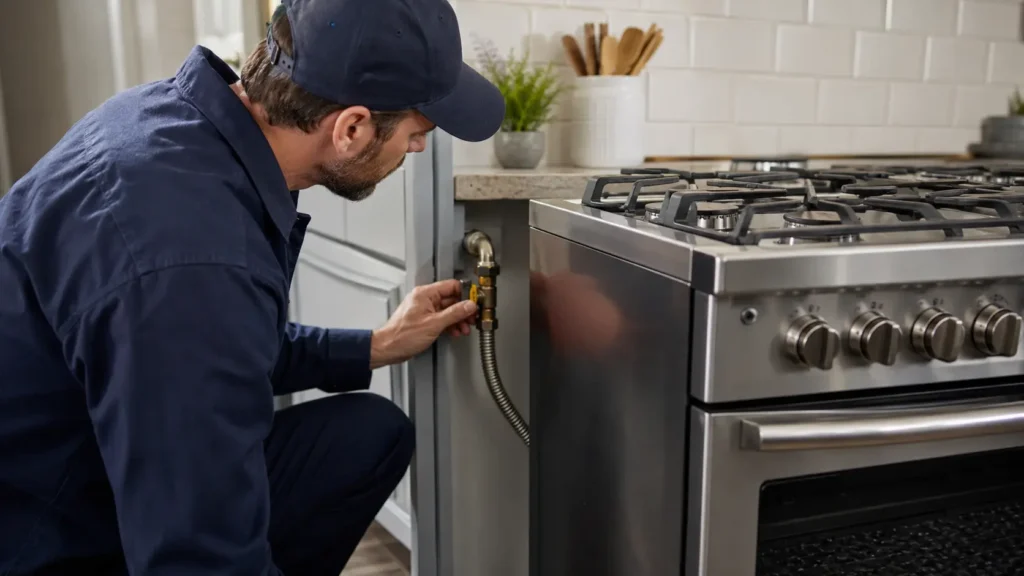
Signs an Existing Stove Gas Line Should Be Checked
Even if your kitchen already has a gas connection, it may still be worth having it inspected before installing a new stove.
Contact a professional if you notice:
- A gas odor near the stove or connection
- Visible corrosion or damage
- A damaged or sharply bent appliance connector
- A shutoff valve that is difficult to operate
- An old connection that has not been used for years
- Uncertainty about who installed the existing piping
If you suspect an active gas leak, do not attempt to locate or repair it yourself. Leave the area and follow the appropriate emergency procedures for your gas utility or local emergency services.
What Should You Expect Before the Installation?
Homeowners can make the appointment easier by having a few details ready.
Before contacting a gas plumber in Tampa, FL, it helps to know:
- Whether your home currently uses natural gas or propane
- What gas appliances are already installed
- The location of the kitchen and new stove
- Whether the stove is replacing a gas or electric appliance
- The model or specifications of the new range, if available
- Whether the project is part of a larger kitchen remodel
The plumber can then evaluate the existing system and determine the most practical way to supply the new appliance.
Tampa and Florida Considerations
Homes throughout the Tampa Bay area vary significantly in age, construction, and plumbing configuration. A newer home that was designed for gas appliances may require relatively minor modifications, while an older property or a home being converted from electric appliances may require more planning.
That is one reason online estimates for gas piping can be misleading. The distance, accessibility, existing infrastructure, and appliance requirements all matter.
Local requirements may also apply depending on the scope of the project. A qualified professional familiar with gas piping work in the Tampa area can determine what is required for the specific installation rather than relying on assumptions.
Should You Install the Gas Line Before Buying the Stove?
You do not necessarily need to install the piping before purchasing the appliance, but it can be helpful to evaluate the gas connection early in the process.
If you are planning a kitchen renovation or converting from an electric range, consider having the proposed installation reviewed before the remodel is complete.
This gives the plumber an opportunity to identify the best route for the gas line for the gas stove while access may still be available.
It can also help you avoid discovering installation complications on the same day the new appliance is delivered.
FAQs About Gas Line Installation for Gas Stoves
How long does gas line installation for a stove take?
The time required depends on the distance from the existing gas supply, accessibility, and whether modifications are needed. A short, accessible extension may be much simpler than running a new line through several areas of the home.
Can an existing gas line be extended to my kitchen?
In many cases, yes, but the existing system should be evaluated first. A professional needs to determine whether the current piping configuration can safely support the additional appliance.
Do I need a plumber to connect a gas stove?
If a new gas line, modification, or questionable existing connection is involved, the work should be handled by a qualified professional. Gas piping requires proper installation and leak testing.
Can I convert an electric stove to gas?
Potentially, if the property has access to an appropriate gas supply and a suitable line can be installed. The electrical requirements of the new appliance should also be reviewed because many modern gas ranges still require electricity for ignition, controls, lights, or other features.
Professional Gas Line Installation in Tampa, FL
Adding a gas stove can be a worthwhile kitchen upgrade, but the gas connection needs to be planned and installed correctly.
Xpress Quality Services provides plumbing services throughout Tampa Bay, including gas line installation for residential projects. If you are installing a gas range, converting from an electric stove, or need an existing gas connection evaluated, a professional assessment can determine the safest and most practical approach for your home.
Contact Xpress Quality Services to schedule gas line installation or plumbing service in the Tampa area.