
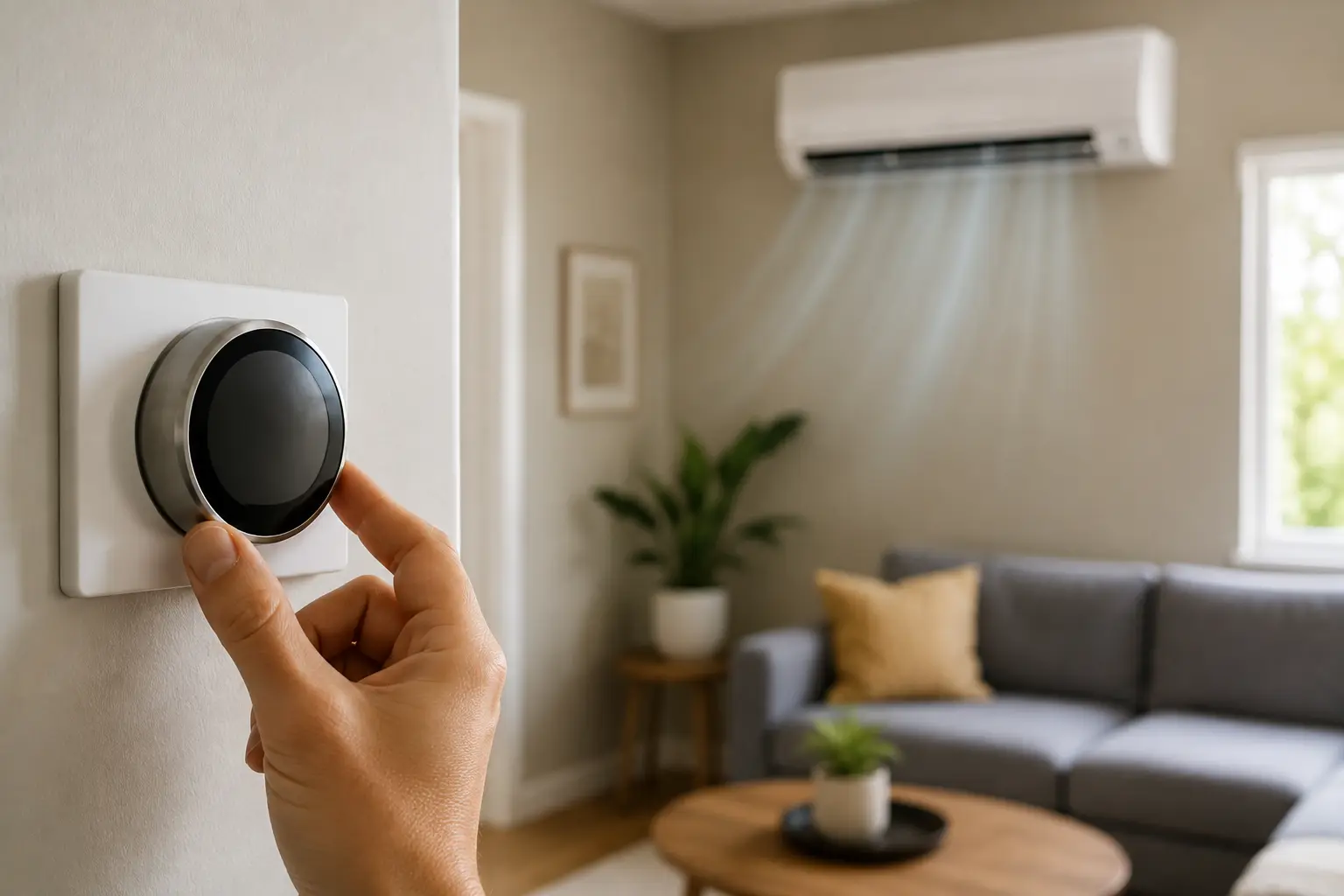
If your AC is running but not cooling, the problem can range from something simple, like a dirty air filter, to a more serious issue involving refrigerant, airflow, or the compressor.
In Florida, where air conditioners often run for long periods during hot and humid weather, even a small problem can quickly become noticeable. The system may sound normal, the thermostat may appear to be working, and air may still be coming from the vents — but the house stays warm.
Before assuming the entire AC system has failed, it helps to understand the most common causes and what you can safely check yourself.
Why Is My Air Conditioner Running but Not Cooling?
An air conditioner needs several things working together to cool a home properly:
- Adequate airflow
- Proper refrigerant levels
- A functioning indoor evaporator coil
- A working outdoor condenser unit
- Correct thermostat settings
- Clean filters and coils
If one part of that process is interrupted, the system may continue running without actually lowering the indoor temperature.
Here are eight common reasons homeowners experience an air conditioner running but not cooling.
The Air Filter Is Dirty or Clogged
A dirty air filter is one of the first things homeowners should check.
The filter helps protect the HVAC system from dust and debris. As it becomes clogged, airflow through the system can decrease.
Reduced airflow can make it harder for the AC to remove heat from your home. In more severe cases, restricted airflow can contribute to the evaporator coil becoming too cold and freezing.
What You Can Check
Locate the HVAC filter and inspect it.
If it is heavily covered with dust or has not been replaced according to the system or filter manufacturer’s recommendations, replacing it may improve airflow.
However, if the AC is not blowing cold air even after installing a clean filter, another problem may be involved.
The Thermostat Is Set Incorrectly
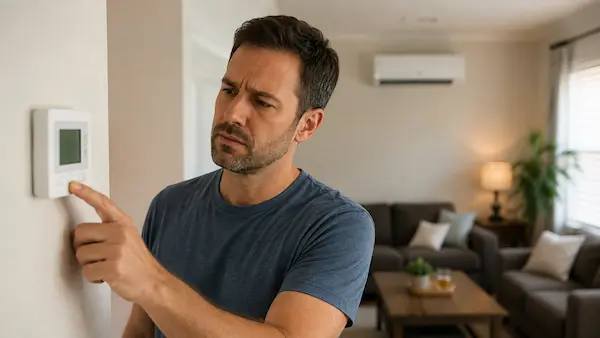
Thermostat settings are another simple issue worth checking before calling for service.
Make sure the thermostat is set to:
- Cooling mode
- A temperature lower than the current indoor temperature
- Fan set to “Auto” rather than continuously running on “On,” if appropriate for your system
When the fan is set to “On,” the blower may continue circulating air even when the AC is not actively cooling. That can make it seem as though the system is running constantly but producing warm air.
If the thermostat uses batteries, weak batteries may also cause unexpected behavior in some models.
The Outdoor AC Unit Is Not Working Properly
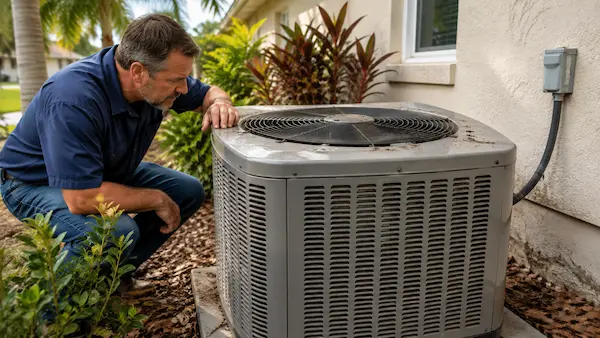
Your indoor air handler and outdoor condenser work together.
The indoor portion moves air through the home, while the outdoor unit helps release heat removed from the indoor air.
If the indoor fan is running but the outdoor unit is not operating correctly, you may feel airflow from the vents without getting meaningful cooling.
Possible outdoor unit problems can involve:
- Electrical components
- The condenser fan
- The compressor
- Power supply issues
- Internal controls
You can visually check whether the outdoor unit appears to be running, but homeowners should avoid opening electrical panels or attempting repairs inside the unit.
If the indoor system runs but the outdoor unit does not, professional AC service is usually appropriate.
The Evaporator Coil Has Frozen
A frozen evaporator coil can prevent an air conditioner from cooling properly.
The evaporator coil is located inside the indoor portion of the AC system. Warm household air passes across this cold coil, allowing heat to be removed.
If the coil freezes, airflow and heat transfer can be significantly reduced.
Possible signs include:
- Weak airflow from vents
- Ice around refrigerant lines or accessible parts of the indoor unit
- Water around the air handler after the ice begins melting
- The AC running for long periods without cooling the house
Frozen coils can be related to restricted airflow, refrigerant problems, blower issues, or other system conditions.
Simply allowing the ice to melt does not necessarily solve the underlying problem.
If the system freezes repeatedly, it should be inspected.
The Refrigerant Level May Be Too Low
Refrigerant plays an essential role in transferring heat out of your home.
Unlike fuel, refrigerant is not normally something an air conditioner should continuously “use up.” If the system is low, there may be a leak or another issue that needs to be diagnosed.
Possible signs of a refrigerant-related problem can include:
- The AC not cooling the house despite running for long periods
- Ice forming on the system
- Reduced cooling performance
- Indoor temperatures that gradually increase
- Unusual sounds near refrigerant lines in some cases
Refrigerant work should be handled by a qualified HVAC professional.
Adding refrigerant without determining why the system is low may only provide a temporary solution if a leak is present.
The Outdoor Condenser Coil Is Dirty
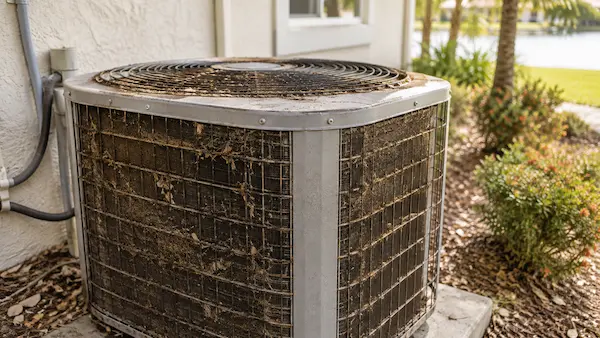
he outdoor AC unit needs to release heat into the outside air.
The condenser coil can become covered with:
- Dirt
- Grass clippings
- Leaves
- Yard debris
- Dust and other buildup
When airflow around the outdoor unit is restricted or the coil becomes heavily dirty, the system may have more difficulty releasing heat.
Florida AC systems can run frequently for much of the year, making outdoor maintenance especially important.
What Homeowners Can Safely Do
Keep the immediate area around the outdoor unit clear of leaves, plants, stored items, and other obstructions.
Avoid pushing debris against the unit or covering the airflow openings.
More thorough coil cleaning should be performed carefully to avoid damaging delicate components.
There May Be a Ductwork or Airflow Problem
Sometimes the air conditioner itself is producing cool air, but that air is not reaching the rooms effectively.
Problems with ductwork can reduce comfort and make it appear that the AC is not cooling the house.
Possible issues include:
- Disconnected ducts
- Damaged ductwork
- Air leaks
- Closed or blocked supply vents
- Return-air restrictions
If only one section of the house feels warm while other rooms cool normally, airflow distribution may be part of the problem.
If the entire home remains warm, the issue may be located closer to the HVAC equipment itself.
The AC System Has a Mechanical or Electrical Problem
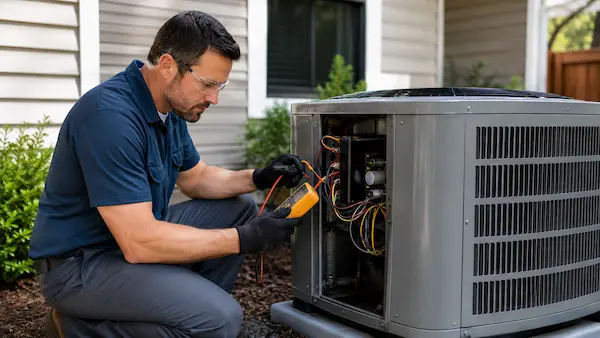
If filters, thermostat settings, airflow, and basic outdoor conditions appear normal, the system may have a component failure.
Possible problems can involve components such as:
- Capacitors
- Contactors
- Blower motors
- Condenser fan motors
- Control boards
- Compressors
- Sensors or switches
Many of these issues can cause an AC system to appear partially operational.
For example, the indoor blower may continue running even though another component responsible for cooling is no longer operating correctly.
Diagnosing these problems requires proper HVAC testing equipment and should not be attempted by homeowners.
Why AC Cooling Problems Are Especially Noticeable in Florida
An AC not cooling in Florida can become uncomfortable quickly because of the combination of heat and humidity.
Air conditioning systems do more than reduce temperature. They also remove moisture from indoor air as part of the cooling process.
When the AC is operating poorly, homeowners may notice both:
- Higher indoor temperatures
- Increased indoor humidity
The house can feel warmer and more uncomfortable even if the thermostat temperature has only increased by a few degrees.
Long cooling cycles are also common during hotter periods, but an AC that runs continuously without approaching the thermostat setting may indicate a problem.
What Can You Safely Check Before Calling for AC Repair?
There are a few basic checks homeowners can perform without opening the HVAC equipment.
Before scheduling service, check:
- Thermostat settings
Confirm the system is in cooling mode and set below the current indoor temperature. - Air filter condition
Replace a visibly dirty or overdue filter. - Supply and return vents
Make sure important vents are not blocked by furniture, rugs, or other objects. - Outdoor unit condition
Confirm the unit is not surrounded by heavy vegetation, leaves, or debris. - Breaker panel
If you know which breaker serves the HVAC system, you can visually check whether it has tripped.
Avoid repeatedly resetting breakers if they continue tripping. That can indicate an electrical issue that should be diagnosed professionally.
When Should You Call for AC Repair in Tampa?
Some cooling problems should be evaluated promptly rather than monitored for several days.
Consider scheduling AC repair in Tampa, FL if:
- The AC runs continuously but the indoor temperature keeps rising.
- Air from the vents is warm or only slightly cool.
- The outdoor unit is not operating.
- Ice repeatedly forms on the system.
- You notice unusual electrical or mechanical sounds.
- The breaker repeatedly trips.
- Water is leaking around the indoor HVAC equipment.
- The system cools much less effectively than it normally does.
An HVAC technician can check airflow, electrical components, refrigerant conditions, temperature differences, and system operation to identify the actual cause.
Should You Turn Off an AC That Is Not Cooling?
In some situations, yes.
If you see significant ice buildup, smell burning, hear loud mechanical noises, or notice an electrical problem, turning the system off and contacting a professional is generally safer than continuing to run it.
If the AC simply seems to be cooling less effectively, basic checks such as the thermostat and filter may be appropriate first.
Continuing to run a system that has a serious mechanical problem can sometimes make the issue worse, so unusual symptoms should not be ignored.
FAQs About an AC Running but Not Cooling
Why is my AC blowing air but not cold air?
The blower fan may still be working while another part of the cooling system is not. Common possibilities include thermostat issues, restricted airflow, a frozen coil, refrigerant problems, or a malfunctioning outdoor unit.
Can a dirty filter cause my AC to stop cooling?
Yes. A heavily clogged filter can reduce airflow and make it harder for the system to cool the home. Severe airflow restriction can also contribute to evaporator coil freezing.
How do I know if my AC needs refrigerant?
Cooling problems, ice formation, and long run times can sometimes be related to low refrigerant, but those symptoms can also have other causes. Refrigerant levels should be checked by an HVAC professional rather than diagnosed based on symptoms alone.
Is it normal for an AC to run all day in Florida?
An air conditioner may run for extended periods during very hot or humid conditions. However, if it runs continuously while the indoor temperature continues rising or never approaches the thermostat setting, the system should be checked.
AC Repair in Tampa, FL
If your AC is running but not cooling, start with the simple checks: thermostat settings, the air filter, vents, and the outdoor unit.
If those do not solve the problem, the system may have an airflow, refrigerant, electrical, or mechanical issue that requires professional diagnosis.
Xpress Quality Services provides AC repair and HVAC services for homeowners in Tampa and surrounding areas. If your air conditioner is running without keeping your home comfortable, schedule an inspection so the source of the cooling problem can be identified and addressed.