
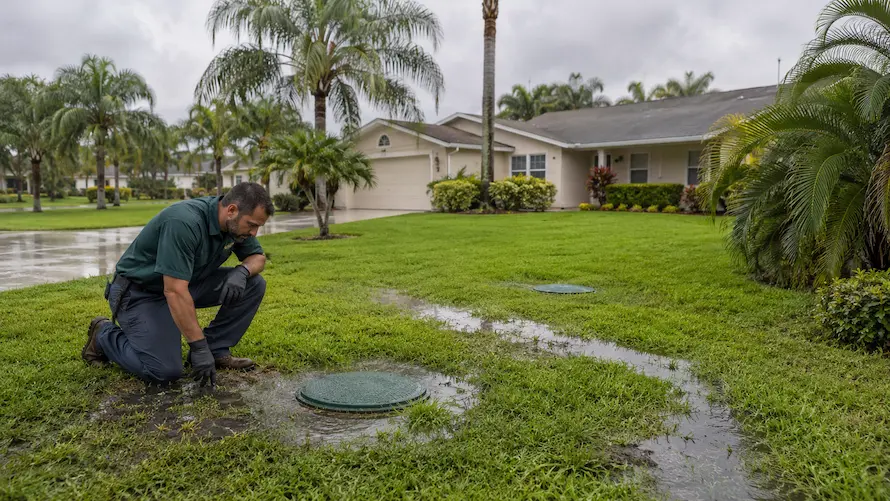
Heavy rainfall can create serious challenges for residential septic systems. When the ground becomes saturated, wastewater may no longer move efficiently through the drain field. This can lead to slow drains, unpleasant odors, standing water, and even sewage backing up into the home.
Understanding the most common septic tank problems after heavy rain can help you respond quickly and prevent a temporary drainage issue from becoming a costly emergency.
Why Heavy Rain Affects Septic Systems
A septic system depends on the surrounding soil to treat and absorb wastewater. After wastewater leaves the septic tank, it travels into the drain field, where it is gradually distributed into the ground.
During extended or intense rainfall, the soil around the drain field can become saturated. When the ground is already holding as much water as possible, wastewater has nowhere to go.
This can cause wastewater to:
- Move through the system more slowly.
- Remain inside the septic tank longer.
- Collect near the drain field.
- Back up into household plumbing fixtures.
- Surface in the yard around the septic system.
Older, poorly maintained, damaged, or improperly sized septic systems may experience problems sooner than systems that are regularly inspected and maintained.
Warning Signs of Septic Problems After Heavy Rain
Some septic problems are easy to notice, while others begin with small changes inside the home. Pay attention to the following warning signs after a period of heavy rainfall.
Slow Drains Throughout the House
One slow sink may be caused by a local clog. However, if sinks, showers, bathtubs, and toilets all begin draining slowly at the same time, the septic system may be struggling to accept additional wastewater.
This is especially concerning when the problem begins immediately after several days of rain.
Gurgling Toilets or Plumbing Fixtures
Gurgling sounds can occur when wastewater and air are not moving normally through the plumbing system. You may hear unusual noises when flushing a toilet, running a sink, or using the washing machine.
These sounds do not always mean the septic tank is failing, but they should not be ignored when combined with other symptoms.
Sewage Odors Inside or Outside the Home
A properly functioning septic system should not produce noticeable sewage odors inside your home.
After heavy rain, odors near drains, toilets, the septic tank, or the drain field may indicate that wastewater is not flowing or venting correctly. Strong odors outside may also suggest that untreated wastewater is reaching the soil surface.
Standing Water Near the Drain Field
Puddles after a storm are not unusual. However, standing water that remains longer around the septic tank or drain field deserves attention.
The ground may also appear unusually soft, muddy, or spongy. In some cases, the grass above the drain field may become greener or grow faster because of excess moisture and nutrients.
Avoid walking or driving over the affected area, as additional pressure can compact wet soil and damage underground components.
Sewage Backing Up Into the Home
A sewage backup is one of the most serious signs of septic trouble.
Wastewater may appear in:
- Toilets.
- Bathtubs.
- Showers.
- Floor drains.
- Low-level plumbing fixtures.
Stop using water immediately if sewage begins backing up into the home. Avoid contact with contaminated water and contact a professional septic service provider as soon as possible.
What to Do When Your Septic System Is Flooded
When the soil surrounding the drain field is saturated, reducing the amount of water entering the septic system is one of the most important steps you can take.
Reduce Household Water Use
Limit activities that send large amounts of water into the system. Until conditions improve, consider postponing:
- Laundry.
- Long showers.
- Dishwasher cycles.
- Multiple baths.
- Unnecessary toilet flushing.
- Other high-water-use activities.
Small changes can reduce pressure on the septic tank and give the drain field time to recover.
Fix Leaking Fixtures
A dripping faucet or continuously running toilet can send a surprising amount of unnecessary water into the septic system. Repairing leaks helps reduce the volume the system must process while the surrounding soil is saturated.
Keep People and Vehicles Away
Do not park, drive, or place heavy equipment over the septic tank or drain field. Wet soil is easier to compact, and heavy weight can damage pipes, tank lids, or other underground system components.
Avoid Opening the Septic Tank
Never attempt to open or inspect a septic tank without proper training and equipment. Septic tanks can contain dangerous gases, unstable components, and contaminated wastewater.
Professional technicians have the tools and safety procedures needed to inspect the system correctly.
Should You Pump a Septic Tank Immediately After Heavy Rain?
Pumping is not always the first solution during active flooding.
When the soil around the septic tank is heavily saturated, removing the contents too soon may create pressure around the tank. Depending on the tank, soil conditions, and groundwater level, this could potentially damage the system or cause the tank to shift.
Pumping may still be necessary if the tank is full, a backup is occurring, or a professional determines that it can be completed safely. The correct decision depends on the condition of the tank, the drain field, and the surrounding ground.
A professional septic inspection is the safest way to determine whether pumping, repair, or simply reduced water use is appropriate.
What Not to Do After Heavy Rain
Trying to solve the problem too aggressively can sometimes make the situation worse. Avoid the following actions:
- Do not continue using large amounts of water.
- Do not enter standing water near the drain field.
- Do not use strong chemical drain cleaners.
- Do not add septic additives as an emergency solution.
- Do not drive over saturated septic areas.
- Do not attempt to repair underground components yourself.
- Do not ignore sewage odors or indoor backups.
Chemical products cannot correct saturated soil, broken pipes, damaged baffles, or a failing drain field.
When to Call a Septic Professional
Some systems return to normal after the rain stops and the soil begins to dry. However, professional service may be necessary when:
- Sewage is backing up into the home.
- Multiple drains remain slow.
- Strong sewage odors continue.
- Standing water remains near the drain field.
- The system has not been inspected recently.
- The septic tank is due for pumping.
- The same problem happens after every major storm.
- You suspect the tank, pipes, pump, or drain field is damaged.
A septic professional can inspect the tank, evaluate wastewater levels, check system components, and determine whether the problem is temporary or related to an underlying failure.
How to Reduce Future Rain-Related Septic Problems
Heavy rain cannot be prevented, but regular maintenance can make your septic system better prepared.
Schedule Routine Septic Inspections
Regular inspections can identify damaged pipes, high wastewater levels, pump problems, and other issues before the rainy season creates additional stress.
Pump the Tank When Recommended
Over time, solids collect inside the septic tank. If the tank becomes too full, less space is available for wastewater, increasing the possibility of backups during periods of high water use or heavy rain.
The proper pumping schedule depends on household size, water usage, tank capacity, and system condition.
Direct Rainwater Away From the Drain Field
Roof gutters, downspouts, sump pumps, and landscape drainage should direct stormwater away from the septic tank and drain field.
Allowing roof runoff or yard drainage to collect near the septic system can oversaturate the soil more quickly.
Conserve Water During the Rainy Season
Spreading laundry loads throughout the week, fixing leaks, and using water-efficient fixtures can reduce the amount of wastewater entering the system.
This is particularly helpful during Florida’s rainy season, when the surrounding soil may already contain significant moisture.
Protect Your Septic System After Heavy Rain
A septic system that drains slowly after a storm may simply need time for the surrounding soil to recover. However, persistent odors, standing wastewater, repeated backups, or multiple slow drains can indicate a more serious problem.
Reducing water use and watching for warning signs can help protect your home, but septic tanks and drain fields should always be inspected and repaired by qualified professionals.
If your septic system is showing signs of trouble after heavy rain, schedule an inspection before the problem causes wastewater damage inside your home or across your property.