
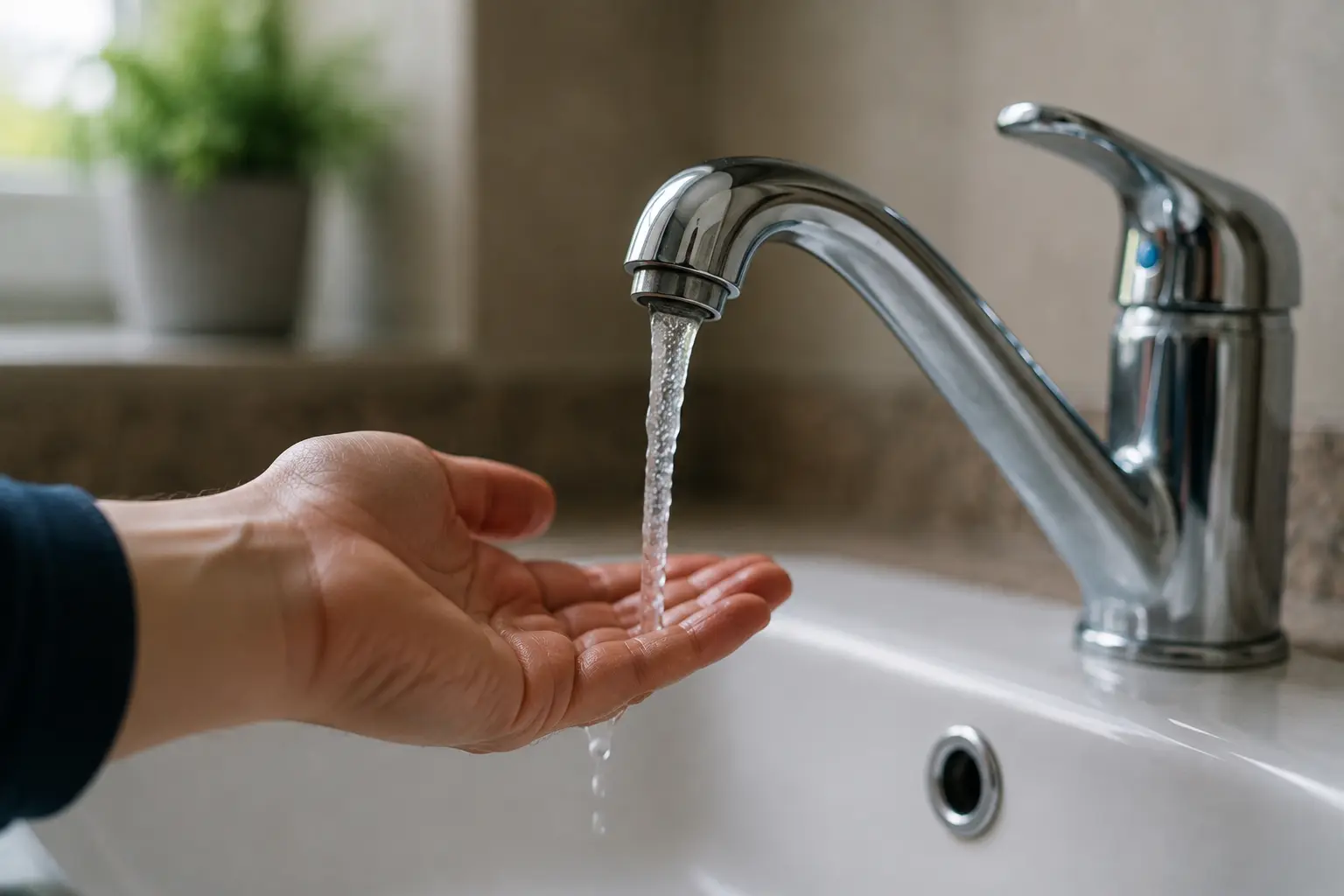
If you have low water pressure in your house, the cause could be as simple as a clogged faucet aerator or as significant as aging pipes restricting water flow throughout the plumbing system.
The first thing to determine is whether the problem affects one fixture, one area of the home, or the entire house. That distinction can help narrow down the possible cause.
For homeowners in Tampa and other parts of Florida, older plumbing materials, mineral buildup, hidden leaks, and problems with the main water supply can all contribute to declining water pressure.
Why Is My Water Pressure Low?
Water pressure can decrease for many reasons, and not all of them require major plumbing work.
Common causes include:
- Clogged faucet aerators or showerheads
- Partially closed shutoff valves
- Plumbing leaks
- Pressure regulator problems
- Problems with the municipal water supply
- Corrosion or buildup inside older pipes
- Pipes that are undersized for the home’s demand
- Aging plumbing systems that restrict water flow
Before considering a major repair, it is important to identify where the pressure problem is occurring.
Is the Low Water Pressure at One Fixture or Throughout the House?
This is one of the most useful questions a homeowner can answer.
Low Pressure at One Faucet or Shower
If only one fixture has poor pressure, the problem is usually more localized.
For example, a bathroom sink may have weak flow while the kitchen faucet and other fixtures work normally.
Possible causes include:
- A clogged faucet aerator
- Mineral buildup inside a showerhead
- A problem with the fixture itself
- A partially closed local shutoff valve
- A restriction in the branch supplying that fixture
In this situation, whole-home repiping would usually not be the first conclusion.
Low Water Pressure Throughout the House
Low water pressure throughout the house points toward a broader plumbing issue.
You may notice:
- Weak shower pressure in multiple bathrooms
- Faucets throughout the house producing less flow
- Washing machines taking longer to fill
- Significant pressure drops when two fixtures operate at once
- Upstairs fixtures having particularly weak flow
When multiple fixtures are affected, the problem may involve the home’s main supply, pressure regulation, leaks, or the condition of the plumbing system itself.
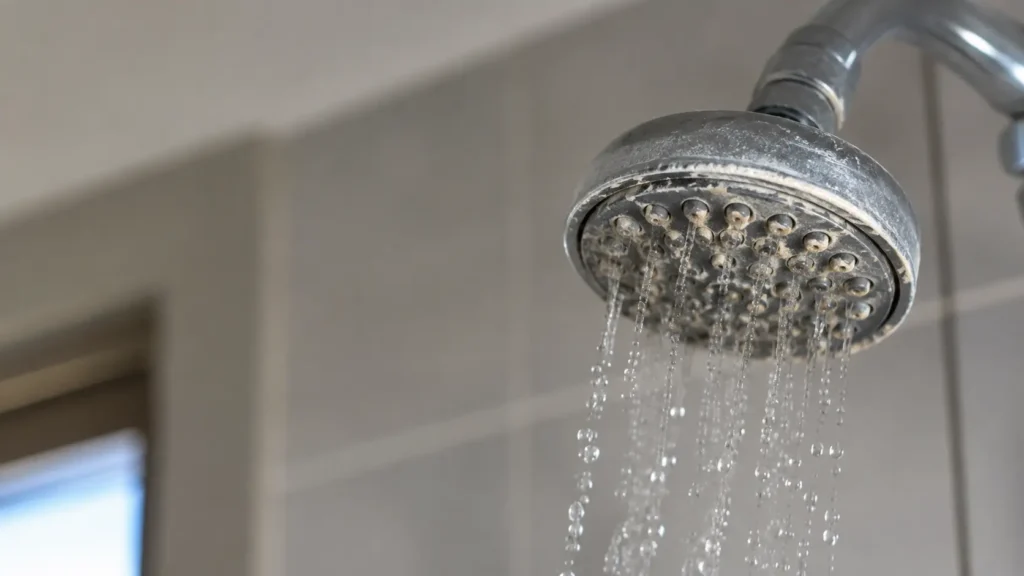
Clogged Faucet Aerators and Showerheads
Mineral deposits and debris can gradually restrict the small openings in faucets and showerheads.
This can make a fixture seem like it has a water pressure problem even when the plumbing behind it is working normally.
What You Can Check
If the problem affects only one faucet, you can inspect the aerator at the end of the spout.
Visible debris or mineral buildup may be restricting flow.
Showerheads can develop similar buildup.
If cleaning or replacing the affected fixture restores normal flow and other fixtures were working correctly, the problem was likely local rather than a whole-house plumbing issue.
A Shutoff Valve May Not Be Fully Open
Your home’s plumbing system contains valves that control water flow.
If the main shutoff valve or another important valve is partially closed, it can restrict the amount of water entering the plumbing system.
This may happen after:
- Plumbing repairs
- Water heater work
- Home renovations
- Emergency shutoffs
- Previous maintenance
Homeowners should avoid forcing a valve that is stuck, heavily corroded, or difficult to operate.
An older valve can sometimes begin leaking when disturbed and may need professional attention.
There Could Be a Hidden Plumbing Leak
A leak somewhere in the plumbing system can reduce available water pressure.
Some leaks are obvious. Others may occur behind walls, beneath floors, in ceilings, or underground.
Possible warning signs include:
- An unexplained increase in water usage
- Damp drywall or ceilings
- Water stains
- Musty odors
- Wet areas around the property
- Sounds of running water when fixtures are off
- Reduced water pressure without an obvious fixture problem
Low pressure alone does not prove that a leak exists, but a sudden change in pressure combined with other symptoms should be investigated.
Finding and repairing a leak early can also help prevent damage to surrounding building materials.
The Pressure Regulator May Be Failing
Some homes have a pressure-reducing valve, often called a pressure regulator, that controls the pressure entering the home’s plumbing.
If the regulator is no longer working correctly, homeowners may experience pressure that is too low, too high, or inconsistent.
A regulator problem may affect many fixtures rather than just one faucet.
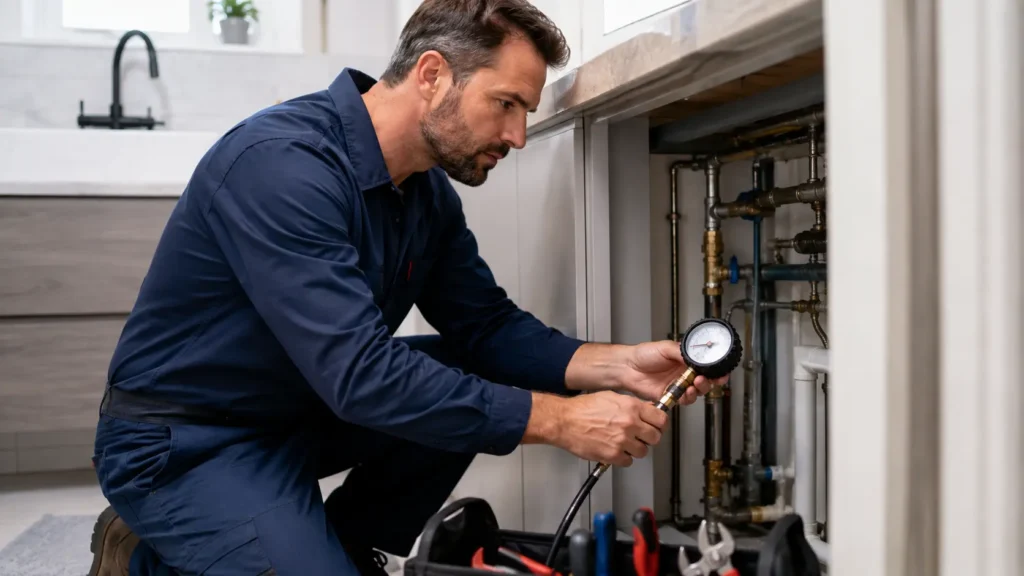
Testing water pressure and evaluating a pressure regulator is generally a job for a plumber, especially if the pressure has changed suddenly throughout the house.
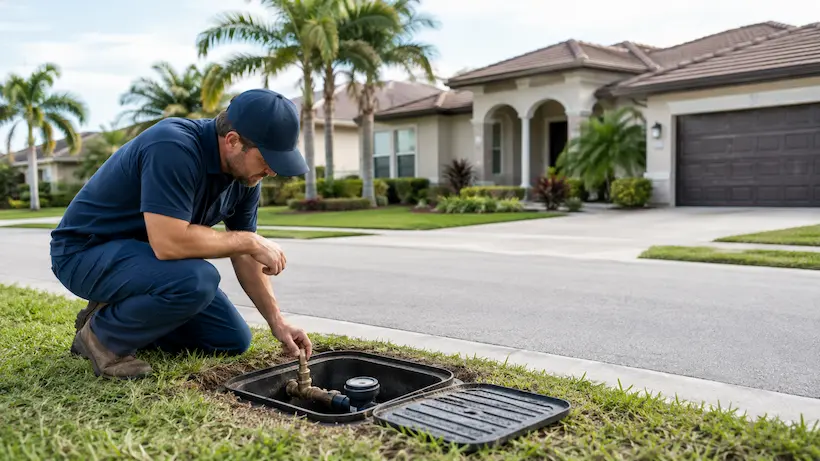
The Problem May Be Outside Your Home
Not every low-pressure problem originates inside the plumbing system.
If your neighbors are also experiencing low pressure, there may be an issue involving the municipal water supply or temporary utility work in the area.
Before assuming that your house needs plumbing repairs, consider whether:
- The pressure dropped suddenly.
- Nearby properties have the same problem.
- Utility work is occurring nearby.
- The issue happens only at particular times.
If the supply pressure reaching the property is normal but pressure inside the home remains poor, the restriction may be within the residential plumbing system.
Old Pipes Can Restrict Water Flow
Older pipes are an important consideration when homeowners experience persistent low water pressure in Tampa, FL, especially when the problem affects multiple fixtures.
Over time, certain piping materials can deteriorate or develop internal buildup.
The outside of a pipe may appear to be a normal size while the usable opening inside has become much smaller.
Think of it like buildup inside an artery: the pipe is still there, but less space is available for water to pass through.
Signs Old Pipes May Be Affecting Water Pressure
Possible indicators include:
- Pressure that has gradually worsened over time
- Weak flow at several fixtures
- Significant pressure drops when multiple fixtures are used
- Recurring leaks
- Visible corrosion on accessible plumbing
- Discolored water in some situations
- A known older plumbing system
Old pipes and low water pressure can be related, but age alone does not mean a home needs repiping.
A plumber should first determine whether the pipes are actually restricting flow or showing other signs of deterioration.
Your Plumbing May Struggle With Multiple Fixtures at Once
Some homeowners have acceptable water pressure until someone turns on a second fixture.
For example:
- The shower becomes weak when a toilet flushes.
- Water flow drops when the washing machine fills.
- Two showers cannot operate comfortably at the same time.
- Kitchen flow decreases significantly while another fixture is running.
Some pressure variation is normal when household water demand increases.
A severe drop, however, may point to restrictions, pipe sizing issues, or other problems within the water distribution system.
This is particularly relevant in homes that have been expanded or remodeled without corresponding updates to the plumbing system.
Corrosion and Internal Pipe Buildup May Be Reducing Flow
Plumbing pipes do not always fail by suddenly bursting.
Some deteriorate gradually from the inside.
Corrosion and deposits can reduce the interior diameter of a pipe, limiting how much water can move through it.
This can produce a slow decline in performance that homeowners get used to over time.
You may not realize how restricted the system has become until the pressure becomes noticeably poor or plumbing work exposes the condition of the pipes.
This is one situation where repairing a single faucet will not solve the broader problem.
When Can Repiping Help With Low Water Pressure?
Repiping means replacing a substantial portion or all of the home’s water supply piping.
It should not be the default recommendation for every pressure complaint.
However, repiping in Tampa, FL may be worth evaluating when low water pressure is caused by widespread restrictions or deteriorated plumbing.
A plumber may consider the overall condition of the system, including:
- Pipe material
- Pipe age and condition
- Internal corrosion or buildup
- History of leaks
- Water flow throughout the house
- Pressure at different locations
- Previous repairs
- Whether problems affect isolated fixtures or the entire system
If the main issue is a clogged showerhead, replacing pipes would obviously not make sense.
If the plumbing system contains widespread internal restrictions and recurring problems, repairing one small section at a time may not address the underlying condition.
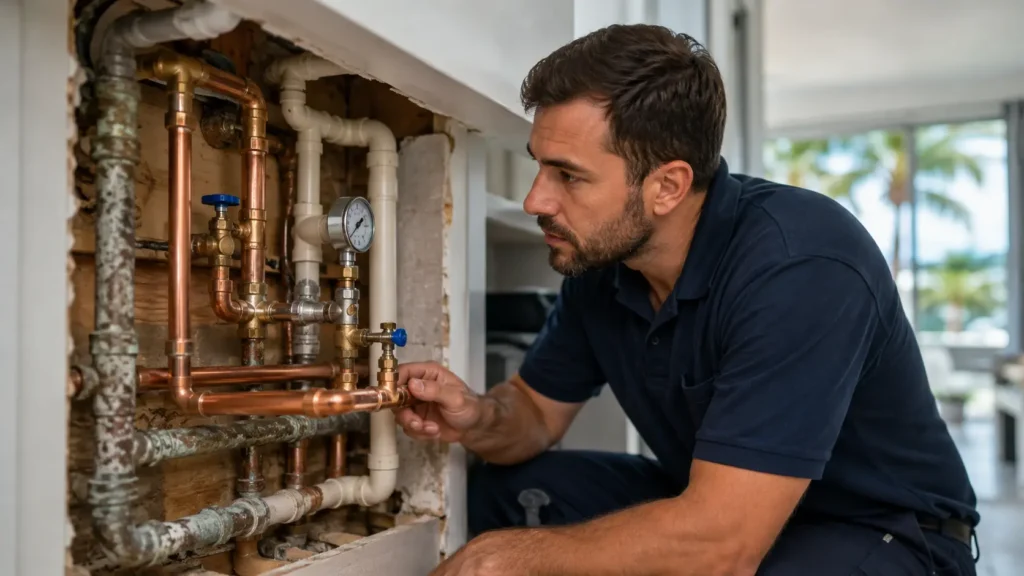
Will Repiping Always Increase Water Pressure?
No.
Repiping can improve water flow when old or restricted pipes are the cause of the problem, but it cannot correct every possible source of low pressure.
For example, repiping may not solve a problem caused by:
- Low municipal supply pressure
- A malfunctioning pressure regulator
- A partially closed main valve
- A localized fixture restriction
- Another issue outside the home’s distribution piping
That is why diagnosis should come before replacement.
The objective is not simply to install new pipes. It is to determine what is restricting water flow and choose a repair that addresses that specific cause.
What Can You Safely Check Before Calling a Plumber?
Homeowners can perform a few simple checks before scheduling service.
Compare Several Fixtures
Run faucets and showers in different parts of the house.
Determine whether the issue affects:
- One fixture
- One bathroom
- Hot water only
- Cold water only
- The entire house
This information can be useful during diagnosis.
Check Faucet Aerators
If only one faucet has poor flow, inspect its aerator for visible buildup.
Check Whether the Problem Is Sudden or Gradual
A sudden pressure loss can suggest a different problem than pressure that has slowly declined over several years.
Ask Whether Neighbors Have the Same Issue
If nearby homes have also experienced a sudden pressure drop, the problem may be related to the water supply rather than your home’s plumbing.
Look for Signs of Leaks
Check accessible areas for moisture, staining, unusual water sounds, or other indications of leakage.
Avoid cutting into walls, adjusting pressure regulators, or attempting major plumbing modifications without identifying the cause first.
Florida Homes and Aging Plumbing
The Tampa area includes homes built during many different periods, which means plumbing systems can vary significantly from one property to another.
Some homes have already undergone partial plumbing updates. Others may contain a mixture of older and newer piping installed during previous repairs or renovations.
This can make pressure problems harder to diagnose.
For example, replacing one damaged section may correct a leak without addressing restrictions elsewhere in the system.
If your home has recurring plumbing problems along with declining pressure, evaluating the overall condition of the piping can provide a clearer picture than continuing to treat each symptom independently.
When Should You Call a Plumber for Low Water Pressure?
Professional diagnosis is appropriate when:
- Water pressure is low throughout the house.
- Pressure has gradually become worse.
- Multiple fixtures are affected.
- Pressure drops dramatically when another fixture is turned on.
- You suspect a hidden leak.
- Accessible pipes show significant corrosion.
- You have experienced repeated plumbing leaks.
- The cause cannot be traced to a faucet or showerhead.
- You are considering repiping.
A plumber can measure pressure, evaluate water flow, inspect accessible piping, and determine whether the problem is related to the supply, a valve, a leak, a pressure regulator, or the pipes themselves.
FAQs About Low Water Pressure
Why is my water pressure suddenly low throughout the house?
A sudden whole-home pressure drop may be caused by a supply issue, partially closed valve, leak, pressure regulator problem, or another restriction. If the cause is not obvious, a plumbing inspection can help identify it.
Can old pipes cause low water pressure?
Yes. Some older pipes develop corrosion or internal buildup that reduces the space available for water to flow. However, pipe age alone is not enough to determine whether repiping is necessary.
Why does my water pressure drop when two faucets are running?
Some reduction in flow can occur when multiple fixtures operate simultaneously. A severe drop may indicate restricted plumbing, supply limitations, pipe sizing issues, or another problem that should be evaluated.
Will repiping fix low water pressure?
Repiping may improve flow if deteriorated or internally restricted pipes are causing the problem. If low pressure originates from the municipal supply, a valve, regulator, or another source, a different repair may be needed.
Low Water Pressure and Repiping Services in Tampa, FL
If you have low water pressure in your house, do not assume that repiping is automatically necessary.
Start by determining how much of the home is affected. A single weak faucet often points to a localized problem, while declining pressure throughout the house may require a more detailed plumbing evaluation.
Xpress Quality Services provides plumbing and repiping services for homeowners in Tampa and surrounding areas. If your home’s pressure has declined, you are dealing with recurring pipe problems, or you suspect aging plumbing is restricting water flow, a professional inspection can help determine the appropriate next step.
Contact Xpress Quality Services to schedule a plumbing evaluation or discuss whether repiping may be appropriate for your home.