
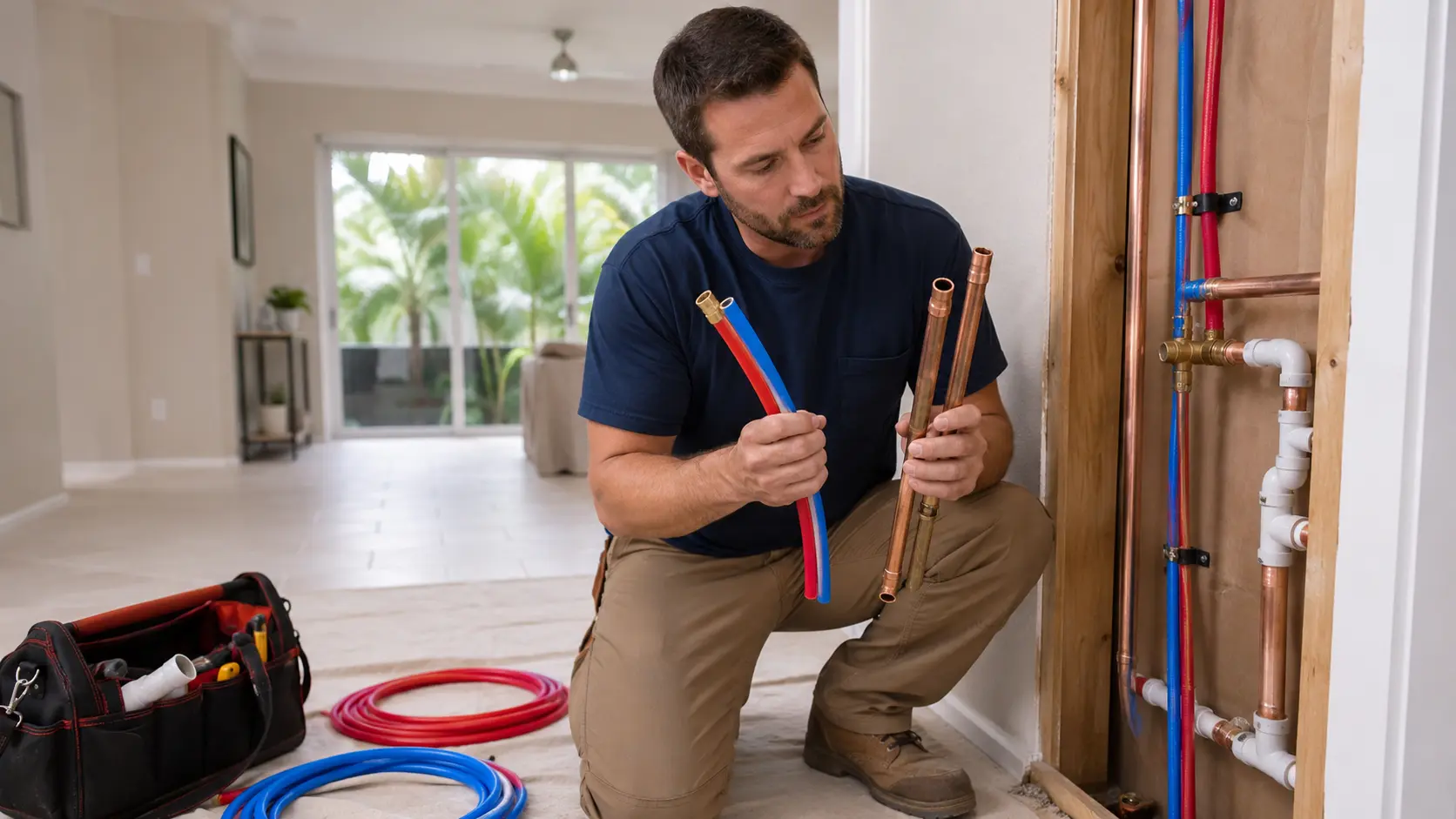
Choosing the right piping material is one of the most important decisions involved in a whole-house repiping project. Two of the most widely used options are PEX and copper, and each offers different advantages depending on the home, budget, water conditions, and installation requirements.
When comparing PEX vs. copper repiping, homeowners should look beyond the initial price. Installation time, durability, corrosion resistance, maintenance needs, and long-term performance should all be considered.
Understanding the differences can help you have a more informed conversation with your plumber before replacing aging or damaged pipes.
What Is Whole-House Repiping?
Whole-house repiping involves replacing most or all of the water supply pipes inside a property.
It may be recommended when existing pipes have become damaged, corroded, unreliable, or too old to continue repairing individually.
Common signs that a home may need repiping include:
- Repeated plumbing leaks.
- Low or inconsistent water pressure.
- Rust-colored or discolored water.
- Corroded visible pipes.
- Unusual tastes or odors in the water.
- Frequent pipe repairs.
- Older plumbing materials.
- Water stains on walls or ceilings.
Repiping can improve water flow, reduce recurring leaks, and provide a more reliable plumbing system. The result depends heavily on the material selected and the quality of the installation.
What Is PEX Plumbing?
PEX stands for cross-linked polyethylene. It is a flexible plastic piping material commonly used for residential water supply lines.
PEX is available in different colors, often red for hot water and blue for cold water, although the color does not change the pipe’s basic performance.
Because PEX bends more easily than rigid piping, plumbers can often route it through walls, ceilings, and confined spaces using fewer fittings.
Advantages of PEX Repiping
PEX offers several benefits for residential repiping projects:
- Lower material costs in many cases.
- Faster installation.
- Fewer fittings and connection points.
- Flexibility around corners and obstacles.
- Resistance to internal corrosion.
- Reduced transmission of water-hammer noise.
- Easier installation in tight spaces.
- Less extensive wall access in some homes.
The flexibility of PEX can make it especially useful for existing homes where pipes must be routed around framing, electrical wiring, ductwork, and other building components.
Potential Disadvantages of PEX
PEX is not ideal for every situation.
Possible limitations include:
- It should not be left exposed to prolonged direct sunlight.
- It may be vulnerable to damage from rodents or sharp objects.
- Installation quality depends on the fittings and connection system.
- Some homeowners prefer the long history and rigid feel of metal piping.
- It must be installed according to local codes and manufacturer requirements.
PEX is commonly installed inside protected walls, ceilings, and other enclosed areas where it is not exposed to ultraviolet light.
What Is Copper Plumbing?
Copper has been used in residential plumbing systems for decades. It is a rigid metal piping material known for durability and heat resistance.
Copper pipes are joined using fittings and either soldered, pressed, or mechanically connected systems, depending on the installation method.
Advantages of Copper Repiping
Copper remains a popular option because it offers:
- Long-term durability.
- Strong heat resistance.
- Resistance to ultraviolet exposure.
- Rigid, stable piping.
- A long history of residential use.
- Compatibility with many existing plumbing systems.
- Recyclable material value.
Copper may be preferred when exposed piping is necessary or when the homeowner wants a traditional metal piping system.
Potential Disadvantages of Copper
Copper also has limitations that may affect a repiping project:
- Higher material costs.
- More labor-intensive installation.
- More fittings may be required.
- Greater wall access may be necessary.
- Certain water conditions may contribute to corrosion.
- Metal pipes can transmit more plumbing noise.
- Copper prices can fluctuate.
Although copper is durable, it is not completely immune to leaks or corrosion. Water chemistry, installation quality, age, and environmental conditions can all affect its lifespan.
PEX vs. Copper Repiping Cost
Cost is one of the biggest differences between PEX and copper.
PEX is generally less expensive because:
- The material often costs less.
- Installation can be completed more quickly.
- Fewer fittings may be required.
- Flexible piping may reduce labor and wall access.
Copper usually costs more because the material itself is more expensive and the installation process can require additional labor, tools, and fittings.
However, the total cost of a repiping project depends on more than the pipe material.
Other factors include:
- Home size.
- Number of bathrooms.
- Number of plumbing fixtures.
- Pipe accessibility.
- Number of floors.
- Required wall or ceiling access.
- Existing plumbing layout.
- Permit requirements.
- Repairs to drywall or finishes.
- Whether the home is occupied during the project.
A professional estimate should account for the entire scope of work rather than only comparing the price of the pipes.
Which Material Is Faster to Install?
PEX is usually faster to install because it is flexible and can travel longer distances without as many joints.
A plumber may be able to route PEX through attics, walls, crawl spaces, or utility areas with less cutting than would be required for rigid copper.
Copper installation typically involves:
- Measuring rigid pipe sections.
- Cutting each section.
- Installing more fittings.
- Joining individual connections.
- Allowing access for soldering or pressing tools.
Faster installation can reduce labor costs and shorten the amount of time a household experiences plumbing interruptions.
However, project duration still depends on the size and layout of the property.
PEX vs. Copper Durability
Both materials can provide reliable service when installed correctly.
PEX Durability
PEX does not rust or develop internal metal corrosion. Its flexibility can also help it tolerate normal movement, vibration, and minor expansion better than rigid piping.
However, it must remain protected from sunlight, excessive heat sources, physical damage, and incompatible chemicals.
The fittings, connection method, and installation quality are critical to long-term performance.
Copper Durability
Copper is strong, rigid, and resistant to heat. Properly installed copper piping can remain functional for many years.
However, its durability may be affected by:
- Corrosive water conditions.
- High water velocity.
- Improper soldering.
- Dissimilar metal connections.
- Mineral buildup.
- External moisture.
- Aging joints and fittings.
Pinpoint leaks can develop in copper systems when corrosion or wear affects small sections of the pipe.
Which Is More Resistant to Corrosion?
PEX has an advantage when it comes to metal corrosion because it is a plastic material.
It will not rust, pit, or corrode in the same way copper can. This can make PEX attractive in homes where the existing metal pipes have experienced repeated corrosion-related leaks.
Copper is naturally corrosion-resistant, but it is not corrosion-proof. Certain combinations of water chemistry, pipe velocity, temperature, and installation conditions may contribute to deterioration.
A plumber may recommend evaluating the condition of the existing pipes and, when appropriate, the property’s water quality before selecting a replacement material.
Which Material Is Better for Florida Homes?
There is no single material that is best for every Florida home.
PEX may be a practical option when:
- The homeowner wants a more budget-friendly solution.
- Faster installation is important.
- The home has tight or difficult pipe routes.
- Existing metal pipes have recurring corrosion problems.
- Reduced plumbing noise is preferred.
- The pipes can be protected from sunlight and physical damage.
Copper may be considered when:
- The homeowner prefers a traditional metal system.
- Some pipes will remain exposed to sunlight.
- High heat resistance is particularly important.
- The existing plumbing layout is compatible with copper.
- The homeowner is comfortable with the higher installation cost.
Florida homes vary significantly in age, construction type, water source, attic conditions, and plumbing design. A material that works well in one property may not be the best option in another.
Does PEX Affect Water Pressure?
PEX does not automatically reduce water pressure.
Water pressure and flow depend on:
- Pipe diameter.
- Plumbing layout.
- Number of fittings.
- Distance between fixtures.
- Water supply pressure.
- Condition of valves.
- Installation quality.
Because PEX systems may use fewer elbow fittings, they can provide efficient water flow when properly designed.
However, using undersized pipes or poorly planned layouts can affect performance regardless of the material.
Is Copper Safer Than PEX?
Both PEX and copper can be appropriate for residential plumbing when the materials are approved and installed according to applicable codes.
The safety and reliability of the system depend on:
- Using approved materials.
- Selecting compatible fittings.
- Following manufacturer instructions.
- Protecting pipes from damage.
- Testing the system after installation.
- Hiring qualified plumbing professionals.
Homeowners should avoid choosing pipe materials based only on online claims or general comparisons. The property’s conditions and the complete plumbing design are more important than any single feature.
Can PEX and Copper Be Used Together?
Yes. PEX and copper can often be connected using approved transition fittings.
A plumber may keep certain sections of an existing copper system while replacing damaged or inaccessible areas with PEX. In other projects, the home may be fully repiped while copper remains near certain fixtures or equipment.
Mixed-material systems must use the proper fittings and installation methods to prevent leaks and maintain code compliance.
Questions to Ask Before Repiping Your Home
Before selecting PEX or copper, ask your plumbing contractor:
- Why is repiping recommended?
- Which areas of the home will be repiped?
- Which material is better for this property and why?
- Will the project require opening walls or ceilings?
- How long will the water be turned off?
- Are permits or inspections required?
- What fittings and connection system will be used?
- Who will repair drywall or finished surfaces?
- What warranties apply to materials and labor?
- Will the new system improve water pressure?
- Are there any existing water-quality concerns?
- How long is the project expected to take?
A professional plumber should explain the advantages and disadvantages of each option based on the property rather than recommending one material for every home.
PEX vs. Copper: Which Should You Choose?
PEX is often selected for its flexibility, lower installation cost, corrosion resistance, and faster installation. Copper is valued for its strength, heat resistance, long history of use, and suitability for some exposed applications.
The best choice depends on:
- Your budget.
- The age and design of the home.
- Existing plumbing problems.
- Pipe accessibility.
- Local code requirements.
- Water conditions.
- Installation preferences.
- Long-term maintenance expectations.
The quality of the installation is just as important as the material itself. Even high-quality piping can fail when it is improperly sized, poorly connected, or installed without adequate protection.
Get a Professional Repiping Evaluation
Recurring leaks, low water pressure, discolored water, and aging pipes can indicate that isolated repairs are no longer the most practical solution.
A professional repiping evaluation can determine the condition of the existing system, identify problem areas, and compare PEX and copper based on the needs of the property.
Choosing the right material and an experienced plumbing contractor can help reduce future leaks, improve water delivery, and provide greater confidence in your home’s plumbing system.